
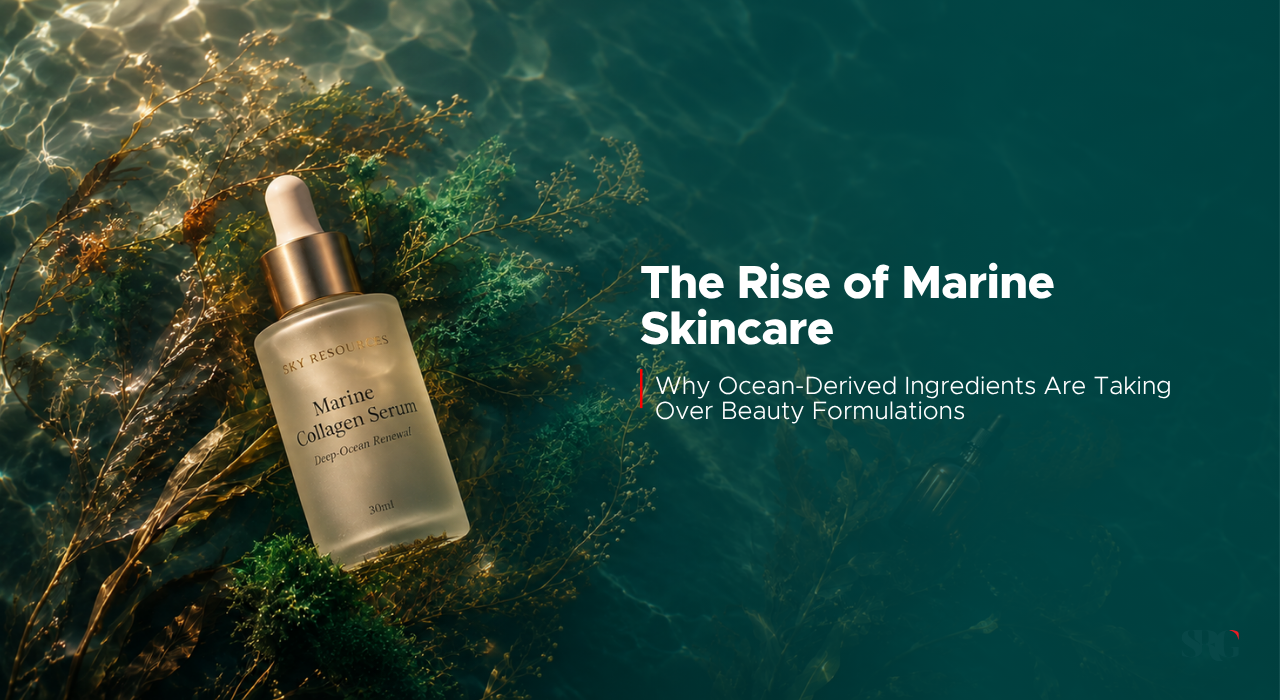
There is a wave building in the beauty industry. Not a metaphorical one — we mean literally, the ocean.
Marine-derived skincare ingredients — algae extracts, sea kelp, marine collagen, phytoplankton, red algae actives — are becoming one of the fastest-growing categories in prestige and mass beauty alike. If you are building or expanding a skincare brand right now, this is the trend conversation you need to be having with your formulator.
At Sky Resources, our R&D team has been watching this closely. We have been quietly integrating marine bioactives into new product formulations for clients who want to stay genuinely ahead of the curve. This article is our honest, practical guide to what marine skincare actually is, why it performs so well, and how to build it into your brand.
What Are Marine-Derived Skincare Ingredients?
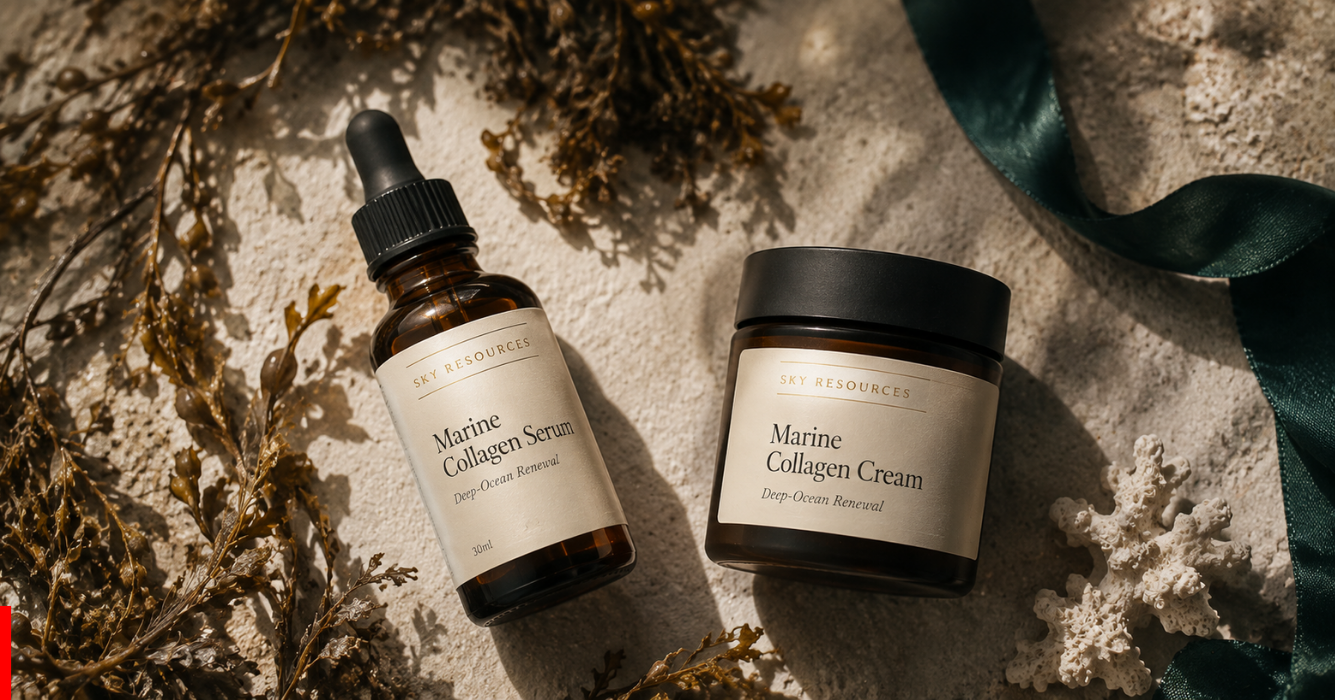
Marine skincare refers to any active ingredient sourced from the ocean — from plants, algae, minerals, and marine organisms. Unlike land-based botanicals, marine-derived ingredients have evolved to survive extreme conditions: fluctuating temperatures, intense UV exposure, oxidative stress, high salinity, and pressure at depth. That resilience translates into genuinely powerful skincare performance.
Algae and seaweed extracts: One of the most diverse ingredient categories in marine beauty. Different species offer different benefits — brown algae for firming and anti-ageing, green algae for hydration, red algae (like carrageenan) for soothing and barrier repair.
Marine collagen: Derived from fish scales and skin (typically tilapia or cod), marine collagen has a lower molecular weight than bovine collagen, which means better skin absorption. It is a growing ingredient in anti-ageing serums and supplements alike.
Phytoplankton: Microscopic marine organisms rich in amino acids, antioxidants, and omega fatty acids. They help stimulate skin cell renewal and improve radiance.
Sea kelp: Rich in iodine, vitamins, and minerals. Used extensively in moisturising and detoxifying formulations. Has natural humectant properties.
Pearl extract and oyster shell: Traditional in East Asian beauty practices, now backed by modern cosmetic science. Rich in amino acids and calcium, linked to brightening and complexion-evening effects.
Why Brands Are Moving Toward Ocean-Based Formulations

Beyond the trend, there are real reasons why marine ingredients are gaining traction in premium formulations.
Performance credentials are strong. Marine ingredients have been extensively researched, particularly in French cosmetic science (thalassotherapy has been practised in Brittany for over a century). The efficacy data is there.
The sustainability story resonates with consumers. Responsibly harvested algae and sea minerals require less land, less water, and lower pesticide inputs than conventional botanicals. For brands building a clean or eco-conscious positioning, marine ingredients support that narrative authentically.
The sensory experience is distinctive. Marine-based formulas often have unique textures — lightweight gels, translucent serums, water-burst creams — that stand out from conventional moisturisers. In a saturated market, texture is a differentiator.
East Asian beauty influence is massive right now. Glass skin, honey skin, mochi skin — all of these K-beauty and J-beauty trends draw heavily on marine ingredients. The consumer awareness is already there.
The Halal Question: Can Marine Ingredients Be Halal-Certified?
This is where it gets nuanced — and where most content in this space falls short.
The short answer is: yes, most marine skincare ingredients can be Halal-certified. But the detail matters.
Under JAKIM guidelines, fish-derived ingredients (like marine collagen from scales or skin) are generally permissible as long as the fish species is considered halal and the processing does not involve any prohibited substances. Algae, seaweed, sea minerals, and phytoplankton are plant-origin and inherently permissible.
The complexity arises with certain marine extracts where the source species or processing method needs verification. Sky Resources’ Halal certification covers our full range of formulations including marine-ingredient products. Our R&D team confirms Halal compliance for any proposed formulation before development begins.
Top 5 Marine Ingredients to Consider for Your Skincare Line
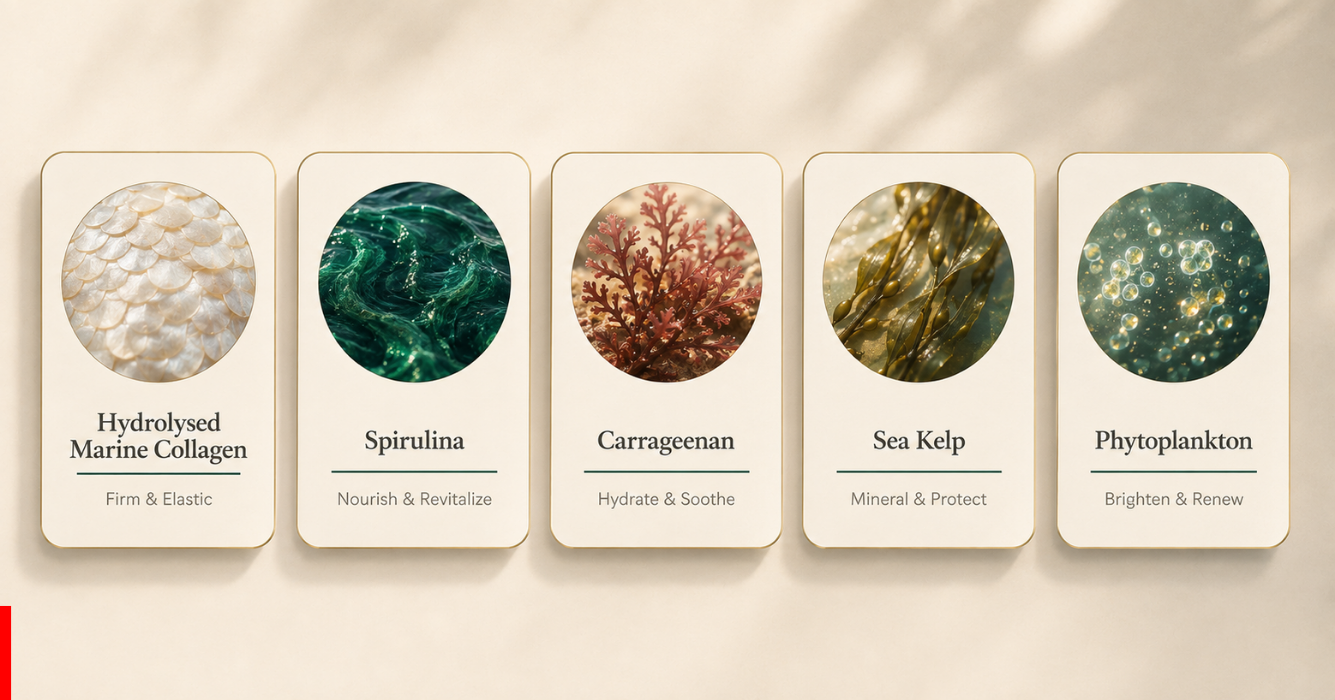
- Hydrolysed Marine Collagen — Anti-ageing serums, eye creams. Targets fine lines, skin elasticity and firmness. Strong consumer recognition.
- Spirulina (Blue-Green Algae) — Antioxidant masks, brightening serums. Packed with protein, vitamins B and E, and beta-carotene. Very clean, plant-origin, Halal-safe.
- Carrageenan (Red Algae) — Creams, serums, soothing formulas. Exceptional film-forming and moisture-retention properties. Vegan and Halal by default.
- Sea Kelp Extract — Toners, essence, hydrating moisturisers. Softens, mineralises, and adds a distinctive ocean-fresh sensory note.
- Phytoplankton Extract — Prestige serums and ampoules. Premium positioning ingredient that commands a luxury price point.
How to Brief Your OEM Formulator on a Marine Skincare Line
- Be specific about the benefit you want the product to deliver — hydration, anti-ageing, brightening, barrier repair — before specifying ingredients.
- Clarify your sustainability requirements. Do you want sustainably sourced, Ecocert-certified marine ingredients? That narrows the supplier pool but strengthens your brand story considerably.
- Discuss sensory preferences early. Marine-ingredient formulas can range from ultra-light gel textures to rich balms.
- Ask about ingredient concentrations. Some marine actives are expensive at efficacious concentrations. Understanding the cost curve early helps you plan pricing and positioning.
- If Halal certification is a requirement, confirm ingredient-by-ingredient Halal status with your manufacturer before any sampling begins.

Want to formulate with marine actives? Our R&D team is ready. → sky-resources.com/new-product-formulation