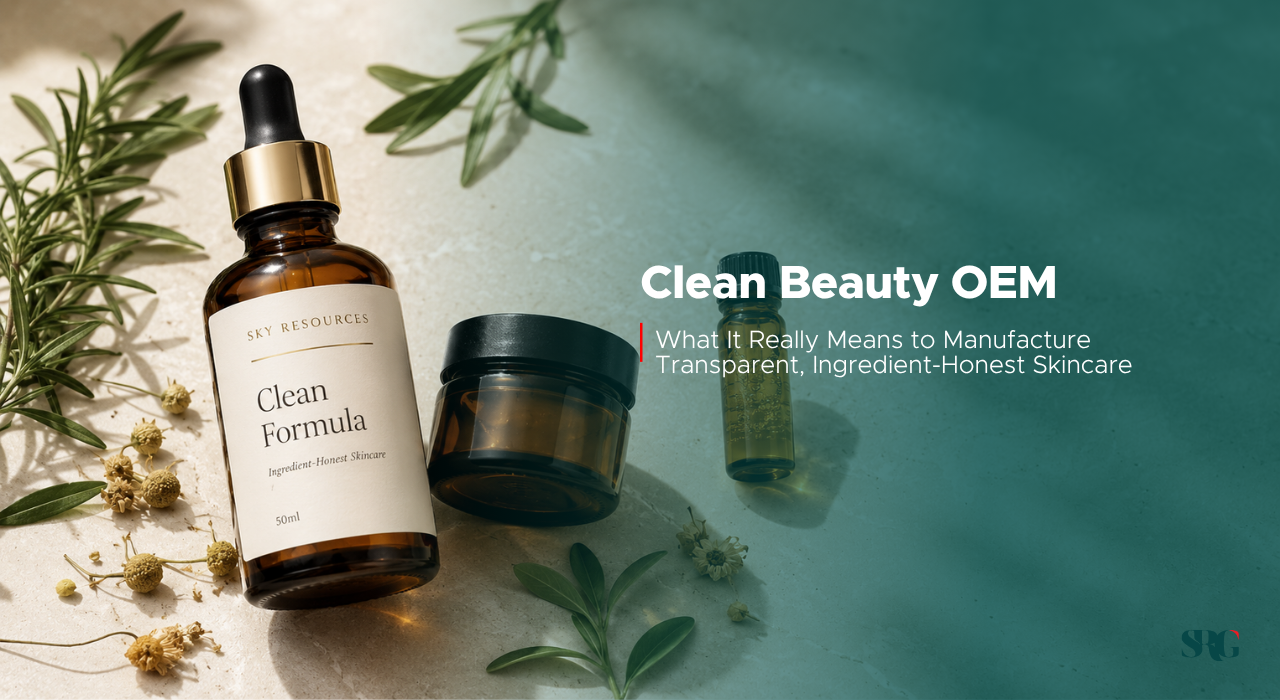
Clean beauty has become one of the most misused phrases in the skincare industry. Brands slap it on products without any certification. Formulators omit ingredients without explaining why. Consumers are left trusting words that may mean absolutely nothing.
That needs to change. And for brand founders building something genuinely clean, it starts with choosing a manufacturing partner who takes transparency as seriously as you do.
At Sky Resources, we have been formulating with natural-origin, ECOCERT-compliant ingredients for years. This is not a trend we jumped on — it is how we have always worked. This article is our honest breakdown of what clean beauty actually means in a manufacturing context, which certifications genuinely matter, and how to build a product line you can put your name on with complete confidence.
What Is Clean Beauty — Really?
There is no single universal definition of clean beauty. That is both the industry’s problem and your opportunity.
Most practitioners agree on the core idea: clean beauty products are formulated without ingredients known or strongly suspected to be harmful to human health, and are transparent about every ingredient they contain. This typically means avoiding:
- Parabens (methylparaben, propylparaben) — preservatives with endocrine disruption concerns
- Sulphates (SLS/SLES) — harsh surfactants linked to skin barrier disruption
- Synthetic fragrances (listed simply as ‘fragrance’ or ‘parfum’) — potential allergen cocktails
- Phthalates — plasticisers found in some fragrance compounds, linked to hormonal disruption
- Formaldehyde-releasing preservatives
- Petrolatum and mineral oil in certain concentrations and grades
What clean beauty does NOT mean: all-natural, organic, or free of all synthetic ingredients. Some synthetic ingredients are perfectly safe, well-tested, and significantly more stable than their natural alternatives. Clean beauty is about safety and transparency, not a blanket rejection of science.
“The brands we respect most in this space are not just removing ingredients. They are adding honesty.”
Why Clean Beauty Manufacturing Requires a Different Kind of Partner
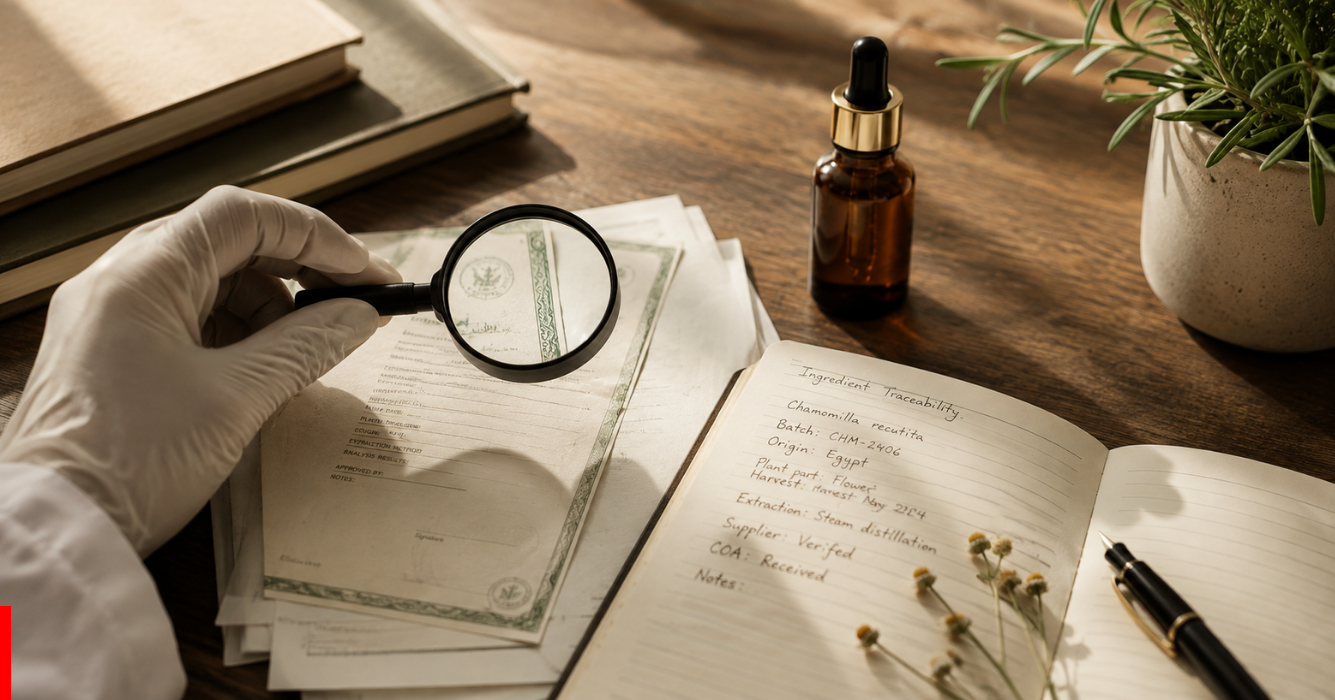
Vetted ingredient suppliers: Your manufacturer needs to source from suppliers who can provide full traceability documentation, residue testing certificates, and certifications for each ingredient. At Sky Resources, our supply chain compliance process means we know where every ingredient comes from.
ECOCERT-aligned formulation practices: ECOCERT is a globally recognised certification body with strict guidelines on natural and organic ingredients in cosmetics. Formulating to ECOCERT standards is a meaningful benchmark — not just a marketing line.
Honest preservation systems: Preserving a clean beauty formula without conventional preservatives is genuinely technically challenging. Our R&D team specialises in alternative preservation systems that are both effective and label-friendly.
No greenwashing in documentation: A clean beauty claim needs to be substantiated — with ingredient lists, certification copies, and supplier documentation. Any manufacturer who cannot provide this on request is not a genuine clean beauty partner.
The Certifications That Actually Matter
ECOCERT / COSMOS: The gold standard for natural and organic cosmetics. COSMOS-certified products have a minimum percentage of natural-origin ingredients, with strict rules on what synthetics are permissible.
JAKIM Halal: In the Malaysian and ASEAN context, Halal certification is both a clean beauty credential and a market access requirement. Halal and clean beauty overlap significantly — both prohibit harmful or impure ingredients.
Cruelty-Free (Leaping Bunny / PETA): No animal testing at any stage of production. Sky Resources does not conduct animal testing, and we can support brands seeking cruelty-free certification.
Vegan certification: Confirms no animal-derived ingredients. Important for a growing consumer segment and fully compatible with our formulation capabilities.
What to be cautious of: ‘free-from’ claims on packaging without any supporting certification are marketing language, not verified standards. Certification bodies verify. Labels do not.
The Dual Compliance Advantage: Halal + Clean Beauty
This is where Sky Resources occupies a genuinely unique space. Most clean beauty manufacturers in Europe or North America are not Halal-certified. Most Halal-certified manufacturers in Southeast Asia are not ECOCERT-aligned. Sky Resources is both.
For brand founders targeting Muslim consumers who are also clean beauty advocates — and this market is substantial and growing — finding a manufacturing partner who can deliver both simultaneously is genuinely rare. We can.
This dual positioning is particularly powerful for brands entering the Gulf Cooperation Council markets, the Indonesian market, or the UK and European Muslim consumer market, all of which are experiencing strong growth in Halal-conscious clean beauty products.

How to Start Building Your Clean Beauty Line
- Audit what you want to avoid — build your free-from list based on your brand values and target market expectations
- Decide which certification you want to pursue — COSMOS, cruelty-free, vegan, Halal, or a combination
- Brief your manufacturer with your clean criteria before any formulation work begins
- Ask for full ingredient documentation — INCI names, supplier certificates, traceability records
- Invest in the product safety assessment — a genuine PIF (Product Information File) that substantiates your claims
Ready to build something you can genuinely stand behind? Let’s formulate clean. → sky-resources.com/contact